



TT Mean in Text: What It Really Means and How People Use It in 2026
If you’ve seen “TT” in text messages, TikTok comments, or Snapchat chats, you’re not alone. The phrase “TT mean in text” has become a trending search because more people are confused about its meaning in modern digital conversations. Depending on context, TT can mean different things, which is why it often causes misunderstanding online.
In simple terms, TT in texting usually stands for “Tears” or “Crying Face,” used to express sadness or emotional reaction. However, it can also have other meanings in slang, gaming, and social media culture. That’s why understanding its context is important.
⚡ Quick Answer: TT Mean in Text
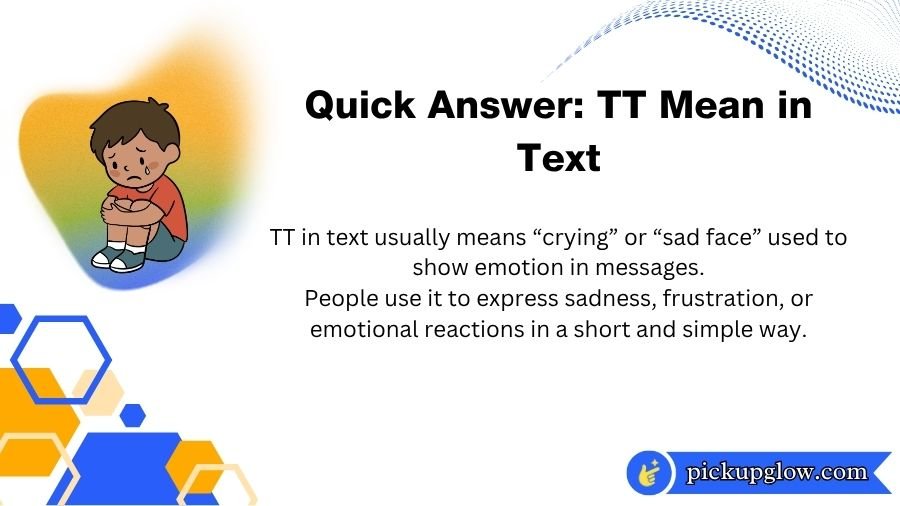
TT in text usually means “crying” or “sad face” used to show emotion in messages.
People use it to express sadness, frustration, or emotional reactions in a short and simple way.
📚 Meaning of TT in Different Contexts
💬 TT in Texting and Messaging
In texting, TT is commonly used as an emotional expression. It represents crying eyes or tears.
- It can mean someone is sad
- It can show disappointment
- It is sometimes used jokingly in emotional situations
Example:
- “I failed my exam TT”
- “You’re leaving already? TT”
👉 Think of it as a shorthand for 😢 or 😭.
Also Read This: AIWS Meaning
❤️ TT in Love and Relationships
In romantic chats, TT often shows emotional vulnerability.
It can mean:
- Feeling lonely without a partner
- Missing someone deeply
- Playful sadness in conversations
Example:
- “I miss you TT”
- “Don’t leave me TT”
In relationships, it is usually soft and emotional, not serious distress.
🗣️ TT in Slang and Casual Language
In casual internet slang, TT is used for exaggerated emotional reactions.
People use it:
- To dramatize small problems
- To joke about sadness
- To react to funny but “tragic” situations
Example:
- “No pizza left TT”
- “My favorite show ended TT”
📱 TT on Social Media (TikTok, Instagram, Snapchat)
On platforms like TikTok and Instagram, TT appears in captions, comments, or hashtags.
It is used to:
- Show emotional reactions to videos
- Add humor or drama
- Engage with relatable content
Example captions:
- “This video made me cry TT”
- “Why is life like this TT”
🌙 Spiritual or Symbolic Meaning of TT
In most cases, TT does not have a spiritual meaning. However, some users interpret it symbolically as:
- Emotional release
- Letting go of sadness
- Expressing inner feelings
This usage is informal and not widely recognized in spiritual contexts.
🔢 Numerology or Cultural Meaning of TT
In numerology or cultural symbolism, TT has no standard meaning.
However:
- Some online communities assign personal meanings
- It may represent initials, codes, or nicknames
But in mainstream usage, it is not a numerology term.
🧠 Examples of TT in Real Conversations
Here’s how TT changes meaning depending on context:
| Context | Example | Meaning |
|---|---|---|
| Texting | “I lost my keys TT” | Frustration / sadness |
| Love | “I miss you TT” | Emotional longing |
| Humor | “Spilled my drink TT” | Playful sadness |
| Social media | “This ending TT” | Emotional reaction |
👉 The meaning is always shaped by the situation, not just the letters.
❓ Common Questions About TT Mean in Text
❓ What does TT really mean?
TT usually means crying or sadness in text messages, representing emotional reactions like 😢 or 😭.
❓ Is TT positive or negative?
It depends on context:
- Negative: sadness, disappointment
- Positive/neutral: playful expression of emotion
❓ Is TT romantic?
Yes, TT can be romantic when used in love messages to show missing someone or emotional attachment.
❓ How should I reply to TT?
Your reply depends on the tone:
- Comfort: “What’s wrong?”
- Support: “I’m here for you ❤️”
- Light humor: “Don’t cry TT 😄”
🏁 Conclusion
In simple terms, TT in text means crying or emotional expression, often used to show sadness, frustration, or dramatic reactions online. While it may look confusing at first, its meaning becomes clear once you understand the context of the conversation.
Now that you know what TT means in text, you can easily understand and respond to it in chats, social media, and everyday online communication.